The Rise & Rise of British Speed Climbing

Words by Ben Olsen

We chart the growth of a thrilling competition that has captured imaginations around the world – visitors to Gleneagles’ new Sporting Club included.


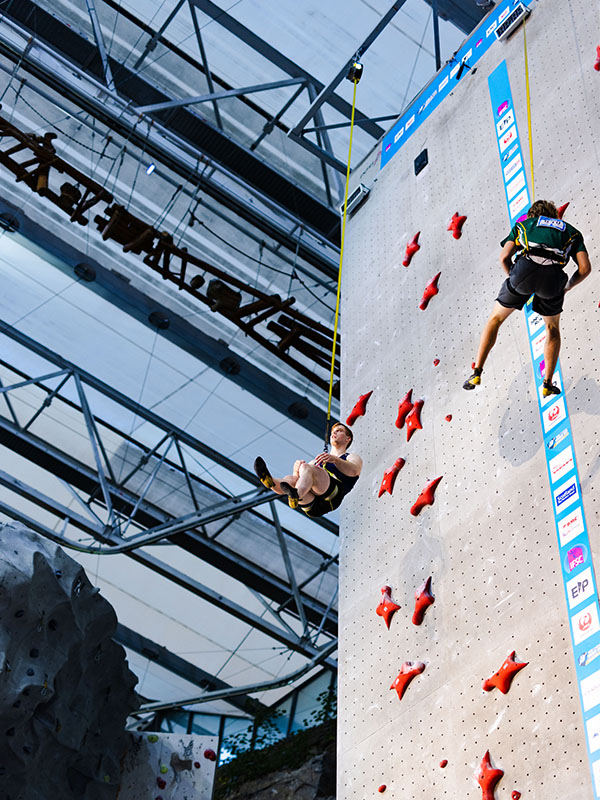
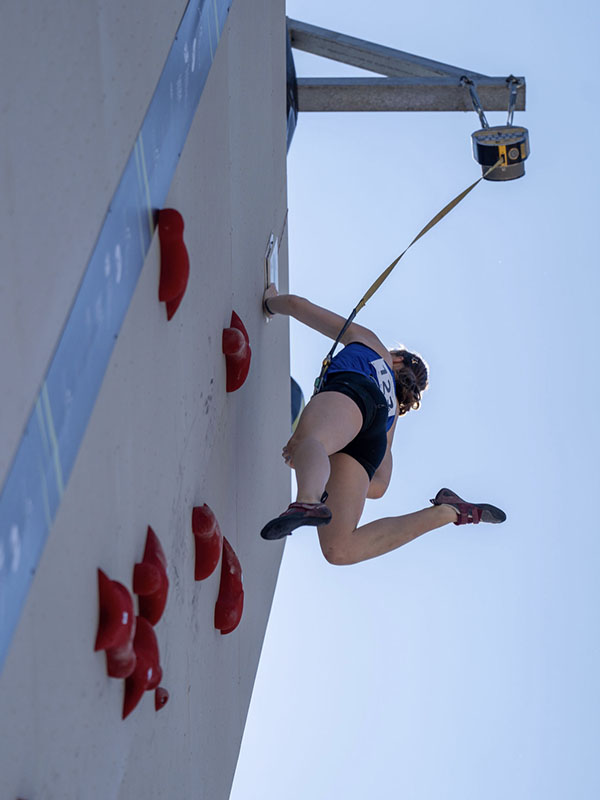
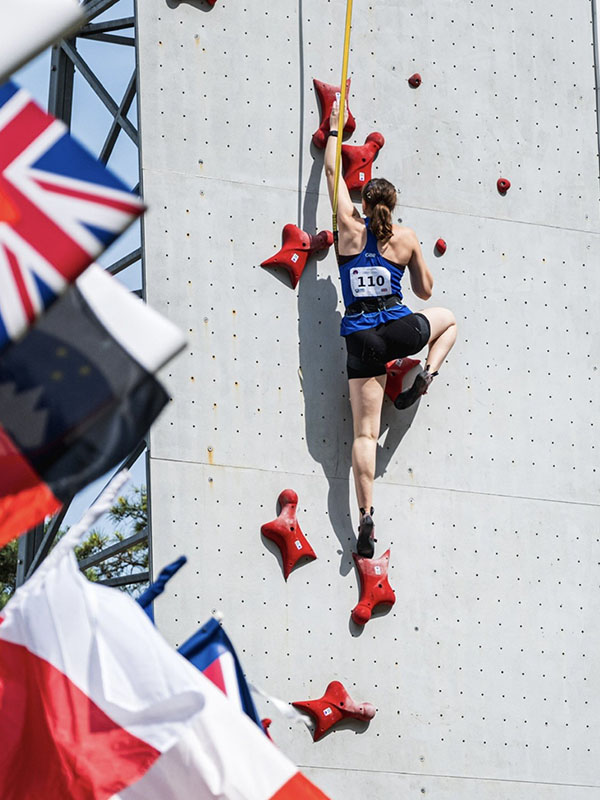
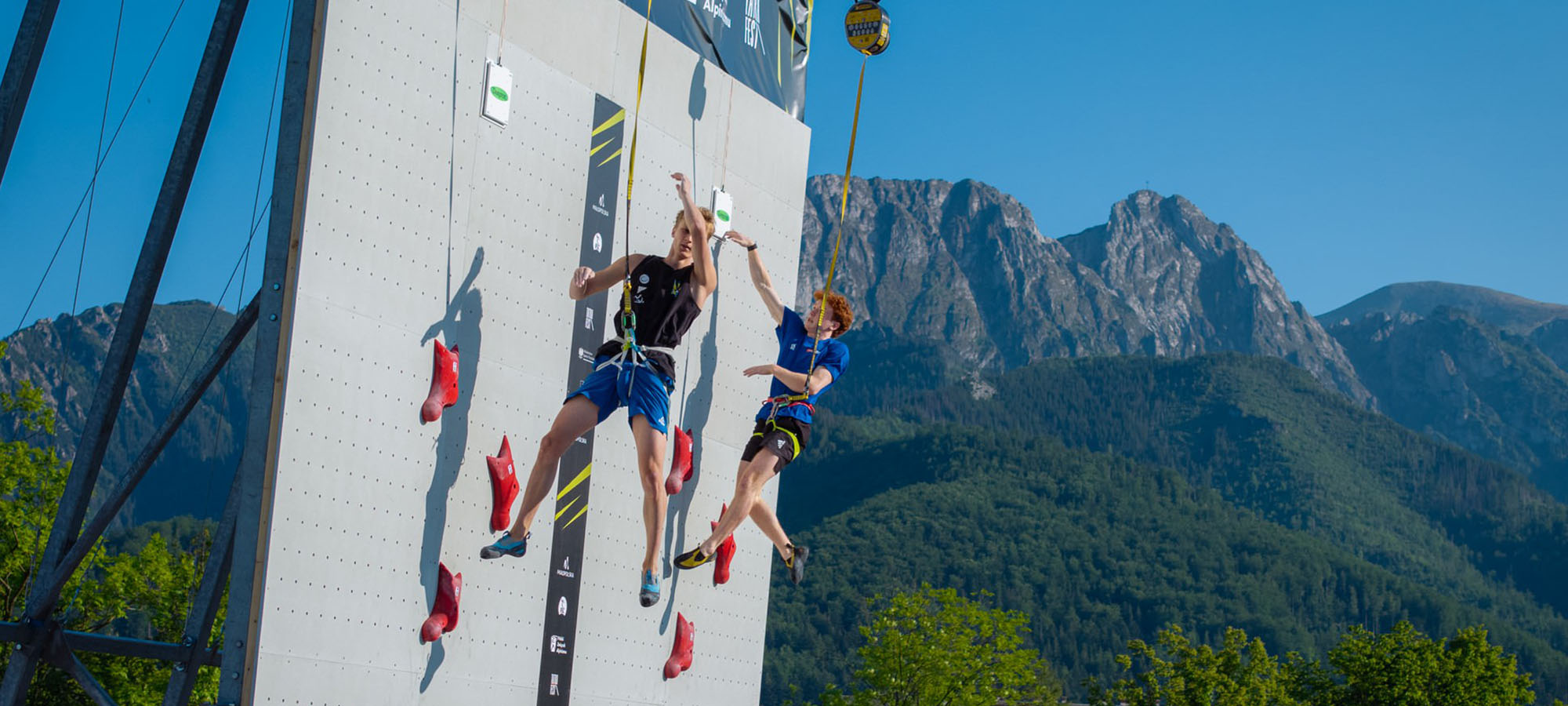
Three uniform bleeps, a blur of limbs and a frenzied scramble skywards towards a buzzer that stops the clock to crown one of two competitors victorious – the precise display of raw power that defines speed climbing turned more than a few heads at last summer’s Paris Olympics. Although not a new sport, its full debut as a medal event at the 2024 Games, which saw Indonesia’s Veddriq Leonardo and Poland’s Aleksandra Miroslaw claim men’s and women’s golds, truly marked its arrival on the world sporting circuit.

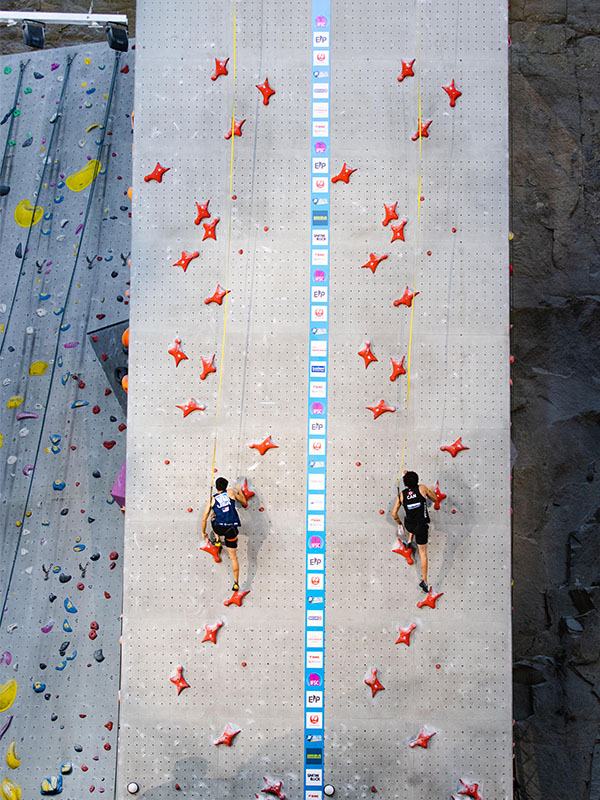
Unlike lead climbing and bouldering, which have varied routes that require significant problem-solving skills to complete the course, in speed climbing the official course – 15 metres in height and featuring 20 handholds and 11 footholds – is identical all over the world. “Speed climbing has been around for decades, first really taking shape in Russia about 50 years ago as a competition format,” says the British Mountaineering Council’s head of performance Dr Laura Needham, who also leads the GB Climbing team. “But it’s really gained traction globally since becoming part of the IFSC circuit and then the Olympics. A big part of its appeal is how easy it is to watch – two climbers race each other and the fastest wins. It’s simple, exciting and accessible.”
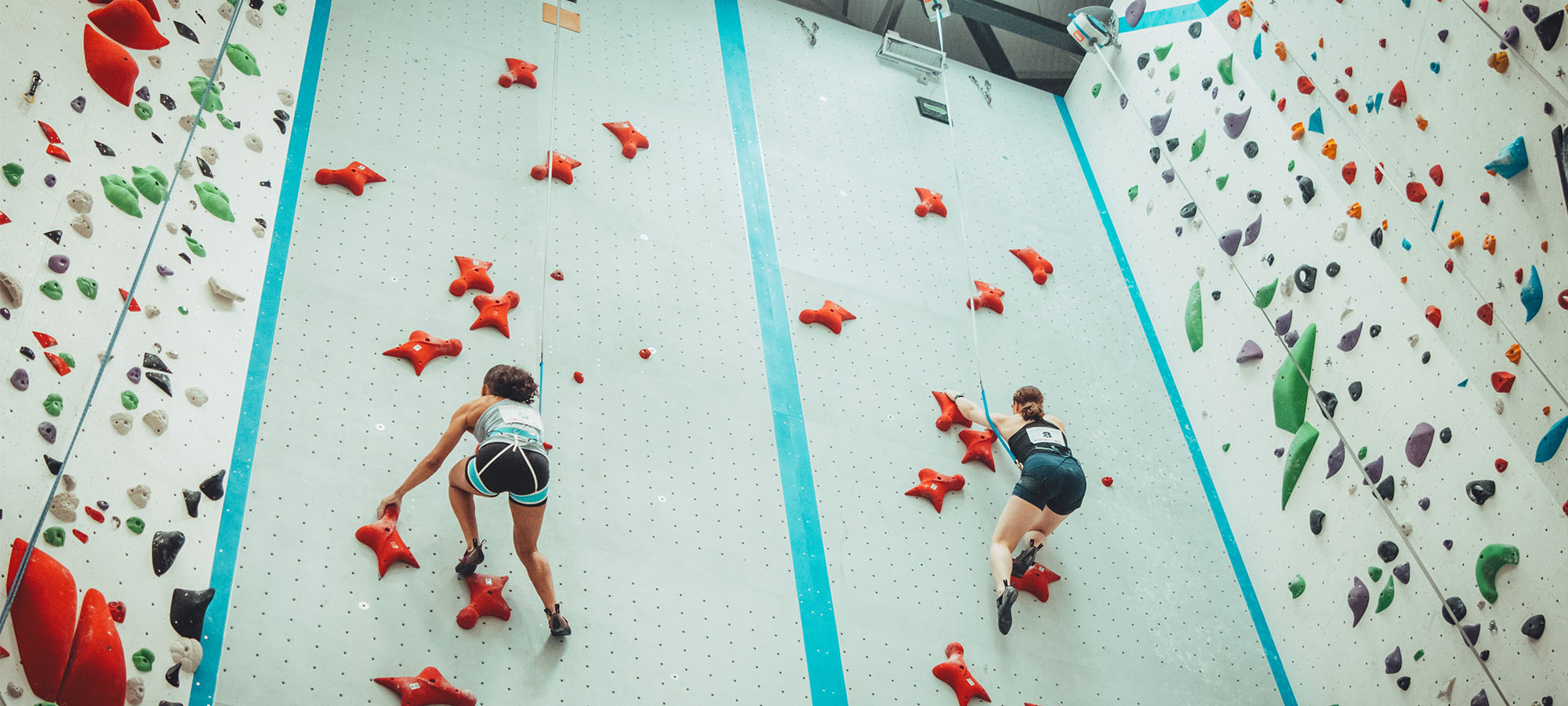
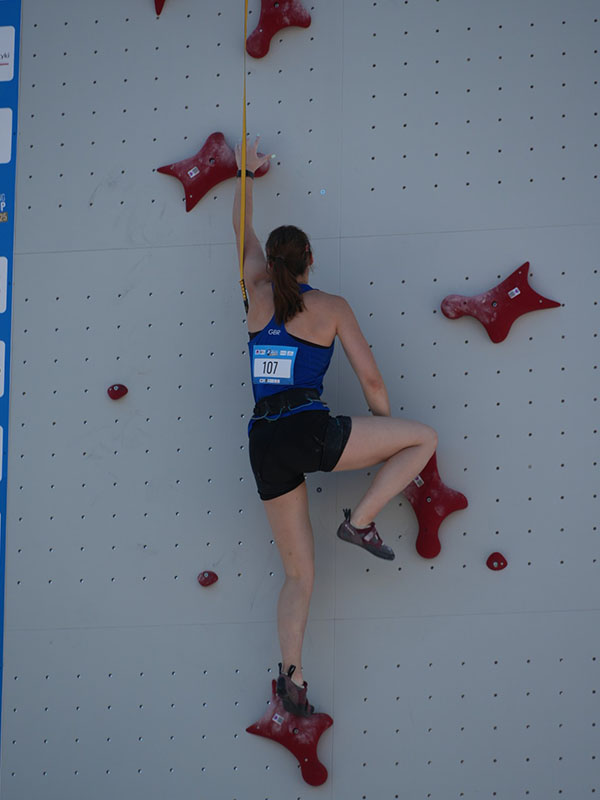
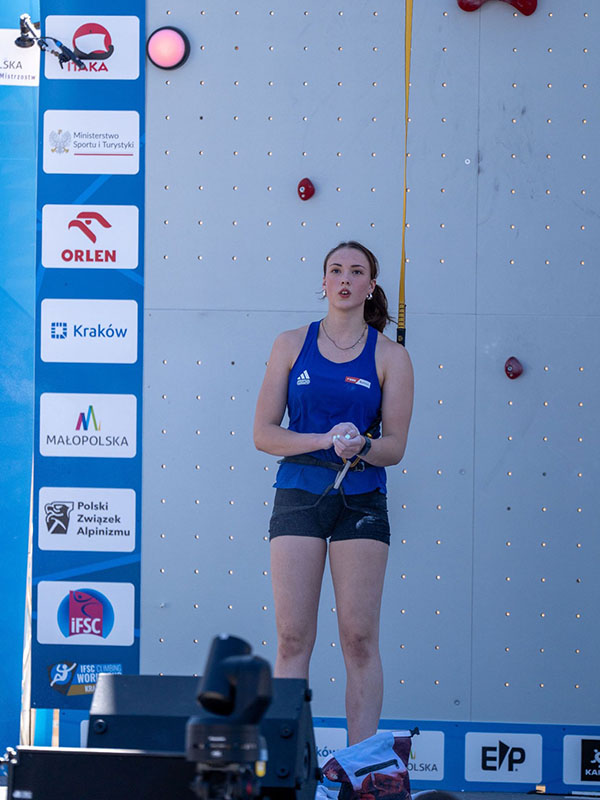
For 18-year-old Scottish athlete Ava Hamilton, who was on the GB team for boulder and lead climbing for three years before making the switch in 2023, the sheer pace and adrenaline of speed climbing drew her in. “Seeing such quick improvement at the beginning proved somewhat addictive,” she says. “I, alongside all speed climbers, am still constantly chasing that feeling and genuinely enjoy the process of pushing myself closer to it every day.”

Despite only competing for two years, Hamilton is the current holder of the UK speed record, clocking up a time of 8.64 seconds at the European Championships last year. “It takes a lot for me to be truly happy with my performance but I was proud of that one,” she says of her record-breaking climb. “I fear I may have set the bar a little high for the rest of the season, but all the more motivation to break the infamous eight-second barrier in competition. It’s completely possible!”

Her success is the result of a dedicated training regime that – as with all speed climbers – involves perfecting smaller sections and sequences of the route, drilling accuracy and technique in order to execute consistently in competitions. A lot of time is spent at the gym, building a strong base of strength and power that can be translated onto the wall, with many strength-training methods overlapping with those of sprinters or track athletes.

That’s not to say that this explosive sport is without nuance and, according to Hamilton, there’s still a surprising amount of problem-solving involved. “It’s barely noticeable to most people watching speed climbing for the first time, but actually, most athletes use slightly different sequences, which might involve skipping or using certain holds, body position through moves, posture, or precise foot placement on the wall to the millimetre,” she says. “I think people don’t quite realise the technicality of speed climbing and the work put in behind the scenes. The smallest mistake in a competition can cost you everything.”


With one eye on making the cut for Team GB at the 2028 Los Angeles Olympic Games, Hamilton is focused on further improving her results in European competitions and competing on the World Cup circuit – while also doing what she can to grow the sport within the UK. “Currently we are a small community. There are facilities available, but very little guidance for newcomers, making it quite an inaccessible sport without being involved in climbing already,” she says. “I hope for speed climbing to reach more people and would like to be a part of that if I can.”

The sport’s increase in popularity hasn’t gone unnoticed, with the Gleneagles Sporting Club offering comprehensive climbing facilities that – as well as state-of-the-art climbing and bouldering walls – includes a competitive speed wall. “The growth in indoor climbing, along with greater interest in more dynamic ways to keep fit, has been impressive in recent years,” says Alan McGonagle, outdoor activities manager at Gleneagles, who adds that instructor-led sessions tailored to individual needs ensure that guests get the most out of their climbing experience. “Two routes side by side with their own timers really brings out the competitive side in anyone – even when unintended!”

Categories