The Women Who Changed Scotland

From queens and scientists to football pioneers and marmalade makers, Scotland has long been home to women who refused to wait for permission before stepping into history. These women broke barriers, challenged conventions and carved out “firsts” that would shape the course of culture, science and society for generations to come.

Scotland’s First Queen

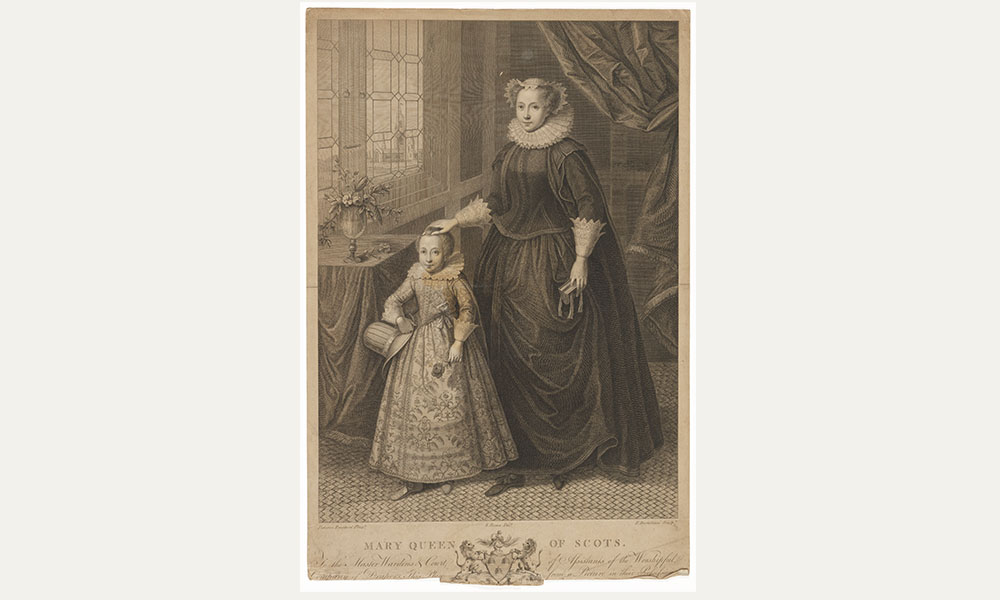
1542-1587: Mary Queen of Scots

At just six days old, Mary became the first queen of Scotland, a role that would include multiple marriages, motherhood, abdication, imprisonment and her eventual execution in 1587 when she was found guilty of plotting to assassinate Elizabeth I. Her tumultuous life is now the stuff of legend, having inspired countless songs, stories and plays across the ages since her rule. The story goes that aside from the many twists and turns of her reign, Mary Queen of Scots was also the first female golfer. However, sceptics say this was a trope dreamt up by her enemies, who reported having seen her playing the Scottish game at Seton House in 1567, days after the murder of her husband, Lord Darnley. The single piece of handwritten evidence for this is now thought to have been used as a political tool to frame her as uncaring during a traditional time of mourning, with her detractors claiming her to have been complicit in her husband’s death. If you’re on the sympathetic side of storytelling, some say she invented the word “caddie” too, a term for the cadets who are thought to have assisted her on the course. 
The Mother of Marmalade

1735-1813: Janet Keiller

It might sound far-fetched, but Paddington’s favourite snack started off life in Scotland (or at least the iteration that crowns our morning toast in gold did). Janet Keiller was the brains behind the first commercial production of marmalade in the world. Apparently her merchant husband landed her with a whole boatload – literally – of oranges when he bought the contents of a ship that was trying to offload its goods. As a shopkeeper already, she was keen to shift her wares, but the fruit was too bitter for people to eat raw, so she set about tweaking her existing quince jam recipe into an orange version. The biggest difference, aside from the flavour, was that this time she included the shredded peel. The new preserve was an overnight success, so much so that she soon found herself in charge of full factory production and by the 1800s Keiller’s Marmalade was being shipped across the whole of the British Empire.  

A Champion of Harris Tweed

1814-1886: Lady Dunmore of Harris

As Lady of the Bedchamber to Queen Victoria, Lady Dunmore was perhaps an unlikely marketer. However, she was the first person to recognise the commercial value in Harris Tweed and paved the way for making it a brand, official orb logo and all. When her husband died she became custodian of the Isle of Harris, a remote part of the Hebrides which was in a period of turmoil that spanned religious disruption and potato blight to the resettlement of entire villages. As a keen philanthropist, she set about finding ways to support the islands. She encouraged ‘home industries’, which included the making of the local tweed. Relocating to Scotland in 1850, she ramped things up, introducing the fabrics to her aristocratic circles for use in fashion and homewares. It was embraced with aplomb by the upper echelons of society, kickstarting its standing as one of the world’s finest, most recognisable and heavily regulated fabrics.

Scotland’s First Female Doctor

1840-1912: Sophia Jex-Blake

The leader of The Edinburgh Seven, the first group of women ever to matriculate at any British university, Sophia Jex-Blake earned a feisty reputation for herself. In 1869 she applied to Edinburgh University to study medicine. She was initially accepted before the decision was overruled, a series of events that set her on the path to collaborating with fellow ambitious women to change the tide on higher education. She rallied other students to challenge the decision, which resulted in her and six other classmates finally being admitted, with the university conceding that they could join the roll-call if they were educated separately, a resolution which meant their fees were higher than their male counterparts. The group faced a whole host of setbacks, including an organised riot against them, but Sophia Jex-Blake did eventually qualify as a doctor and set up the city’s first women’s practice at Manor Place in the New Town.

Playtime Pioneer

1872-1947: Lileen Hardy

In the early twentieth century, the Canongate in Edinburgh was largely considered a slum. While older children could go to school at the time, there was little to no provision for younger ones, who were often left to their own devices while their parents were at work. Seeing the need of her neighbours, Lileen Hardy decided to set up a free kindergarten, a project she devoted her life to. She was pioneering in her approach, allowing children to learn through play and putting emphasis on the benefits of outdoor learning. Many of her principles, which were loosely based on the Montessori method, are still considered cornerstones of early years learning today. In this way, her legacy stretches far beyond the infants she taught in her lifetime, with the lives of thousands of children touched by her enduring legacy.

Quite the Catch

1889-1970: Georgina Ballantine

Born in Caputh, Perthshire, the daughter of a ghillie, Georgina Ballantine grew up attuned to the rhythm of the nearby River Tay. At age 32, in 1922, she secured her place in history. On an autumn evening, while fishing with her father, she hooked a legendary 64-pound salmon that was equal to half her own body weight – the largest ever caught on rod and line in British waters, a record that still stands today and is unlikely to be broken because of declining salmon numbers. With no modern equipment to help, the battle lasted over two hours. At the time, Georgina donated the fish to the Perth Royal Infirmary, where it was enjoyed by staff and patients. A model of the fish, which measured 54 inches in length, is still on display at Perth Museum today.

Full Steam Ahead

1894-1978: Victoria Drummond

Named after her godmother Queen Victoria, Victoria Drummond was destined for a remarkable life. Growing up at Megginch Castle in Perthshire, she was fascinated by engines from a young age and despite being told that marine engineering was “no place for a lady,” she pursued her passion with grit. In 1922 she became the UK’s first certified female marine engineer and went on to sail across the world. During the Second World War, she survived repeated bombings while serving on merchant ships, earning the Lloyd’s War Medal for Bravery at Sea and the Polar Medal.

Game Changer

1947-present: Elsie Cook

Elsie Cook’s love of football began on the streets of Stewarton, but she soon found herself up against one of the sport’s biggest opponents: a ban that barred women from playing on official pitches. Undeterred, she became a driving force in reversing the ruling and threw her energy into coaching and organisation. In 1972, she co-organised and coached Scotland’s first official women’s international football match against England – an event that helped put women’s football firmly on the map. Beyond the pitch, Cook championed grassroots opportunities, ensuring that the next generation of girls would never have to sit on the sidelines. Today, her pioneering spirit is recognised as a cornerstone of Scottish women’s football.

Categories