Dish of the Day: Decadence

October 2026

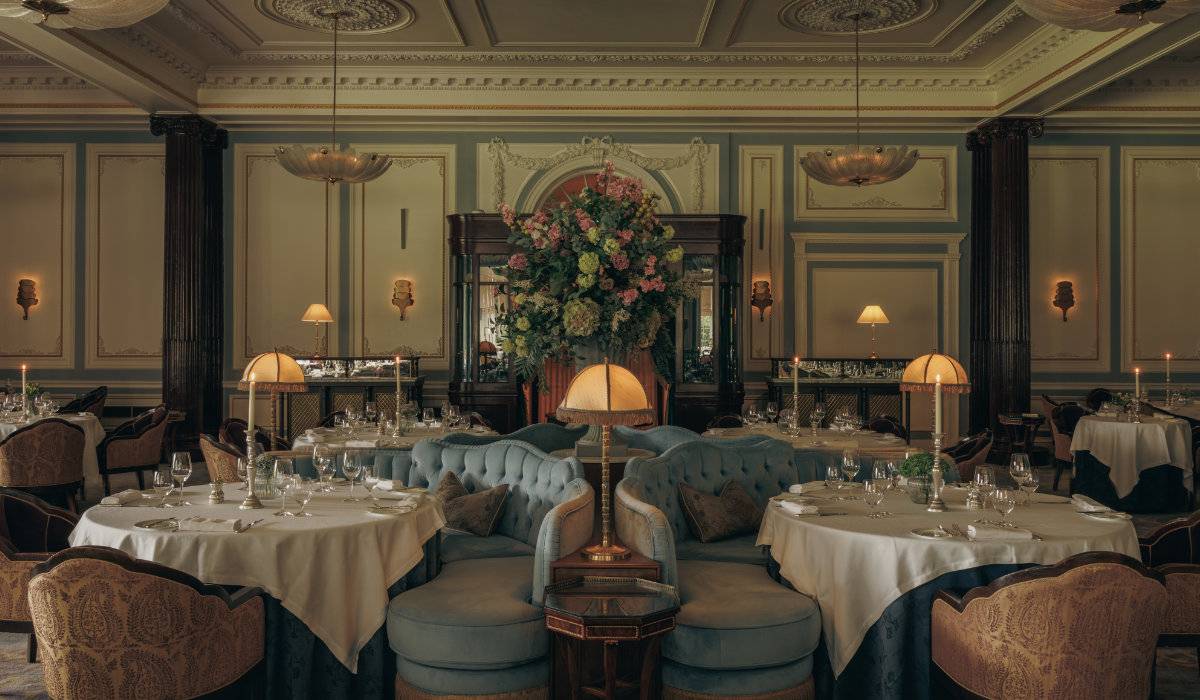
With its timeless glamour, live music from the grand piano and the gentle flicker of candlelight, the theatre of The Strathearn has been perfectly preserved since it opened in 1924. It was the hotel’s original dining room, and its appeal has endured. It is, and always has been, a place to gather for dinner parties and occasions worth toasting, serving up just the right amount of pomp and ceremony. Here we look back at one of the earliest menus and how it fit into the food landscape of the time.

The sweeping proportions of the dining room in The Strathearn feel fitting for a space that has seen its fair share of grand gatherings. It’s here that over the ages we’ve entertained some of our most high-profile residents, gathering the great and the good of high British society to enjoy the timeless appeal of fine food and even better company. 

The current iteration doesn’t stray too far from the original, save for a few romanticised details in the powder blue banquettes and the fringed velvet curtains dotted around the sommelier’s station and the entrance to The Scullery (which was originally a small run of rooms housing the Wine Dispensary, The Still Room and The Silver Plate Cleaning Area). There are still the gilded columns, the original fireplace and the magic of tableside Gueridon service, and even today guests dine by the soft glow of candlelight as was always intended. 
In 1924, there would have been a real buzz around the opening of a new restaurant in this part of the world, as the concept was still relatively novel. A newspaper report around the time of the hotel’s opening described the spectacle of The Strathearn: “The dining room accommodates about 400 guests at small tables, and the effect aimed at here has been excellently achieved.” Another report said, “The decorative work could not be equalled in Europe”. This desired “effect” included classic Art Deco shapes in the repeated pattern of the green and blue carpet and the fan-shaped lamps, as well as the gilded portraiture hanging around the walls. 

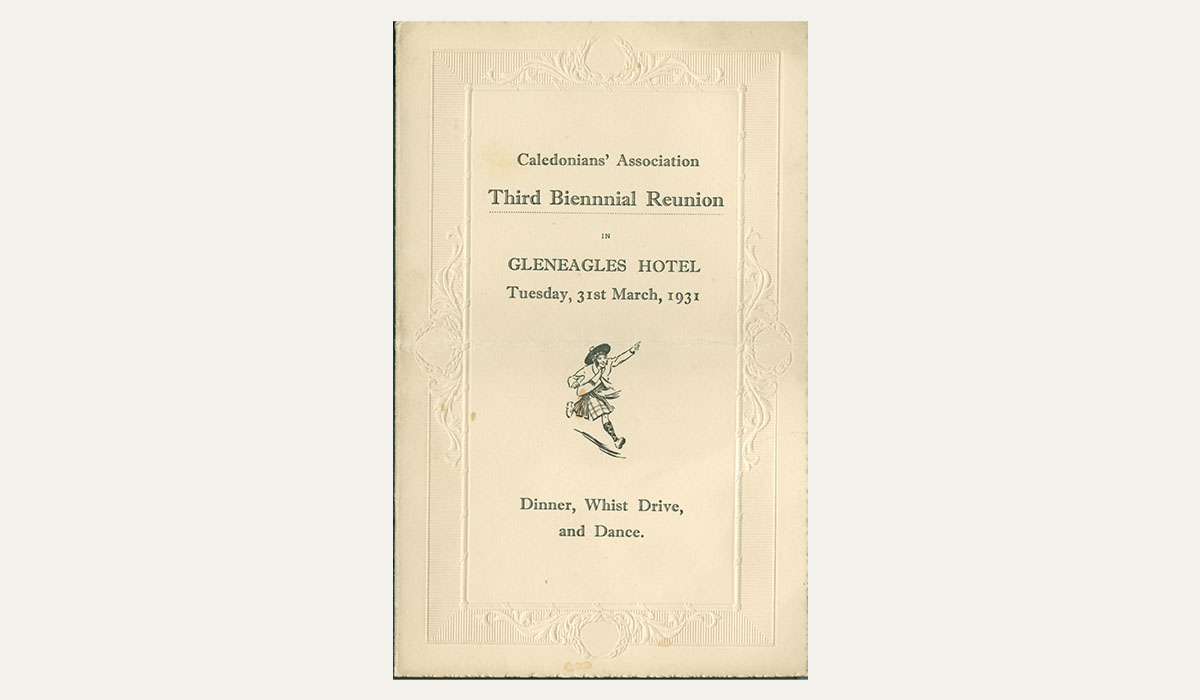
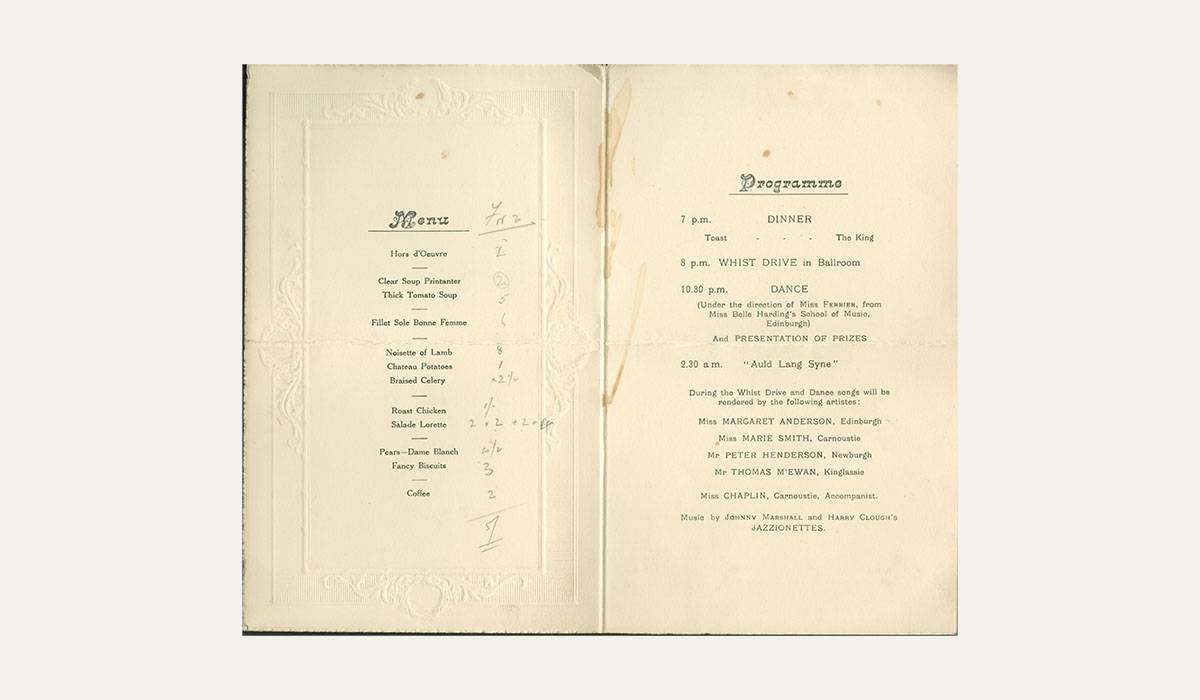
The aforementioned 400 guests would have been treated to our enduring top-class service and crisp white tablecloths, but one thing that has evolved is the food offering. The selected menu here from 1931 shows dishes of thick tomato soup, braised celery and ‘fancy biscuits’. This would have been a fairly typical spread at the time, alongside classic local game like grouse. One guest commented that “all the game was pressed at the table and the juice served on the spot. Gleneagles Hotel service was of the very highest order”.

Food historian Dr Annie Gray notes that “most high-end restaurants gave their menus in French, but by the 1930s some were starting to use English or, as here, a gently Frenchified version thereof.” 

While the more general trend for embracing French cuisine in the 1900s is present and correct, the dessert of Pears Dame Blanch(e) is misspelt, Dr Gray notes, indicating that the chefs were hired a little closer to home, despite the restaurant’s lofty ambitions of being continental. Dame Blanche was a popular serve of vanilla ice cream topped with melted chocolate and whipped cream that was seen scooped into chi-chi sundae glasses and thought to have been very avant-garde by restaurant-goers of the day (keeping in mind that freezers in people’s homes were not yet commonplace). 

“Hotel meals were very popular as it was often cheaper than trying to do the same kind of thing in-house, especially if a household had a fairly plain cook, and it meant less clearing up. All middle-class households still had servants, but they were harder to retain, and many now lived out, so they were getting more difficult to control,” Dr Gray continues. 

For the older generation of the 1920s and ’30s, stepping into a restaurant of this scale was still charged with a sense of wonder, while the younger crowd were already beginning to treat it as an everyday indulgence. As Dr Gray puts it, “Restaurants really only got going at the end of the 19th century, so they were still something of a novelty for many of the older generation, while the younger crew took them for granted.” A century on, that balance between spectacle and familiarity remains – dining here still feels like an event, but one that manages to wrap its grandeur in warmth and timeless appeal.

Dr Annie Gray is food historian and author, whose latest work is called The Bookshop, The Draper, The Candlestick Maker: A History of the High Street.

Categories